Plasterers in Lowestoft, Suffolk
Rendering in Lowestoft: outside walls that keep the weather out
Rendering is the outer coating on a house wall that keeps rain out. Fill in the short form, pick a time for a call back, and a local plasterer rings with a free quote for patching or rendering again.
- Cracked and hollow render cut out and patched
- Whole houses or a single wall rendered again
- Sand and cement, lime, silicone and monocouche finishes
- Guide prices for a bungalow, a semi and a detached house
Why render cracks and comes away
Render is the outer coating on the walls of a house, and it keeps the rain out. On the east coast, wind and rain wear it hard.
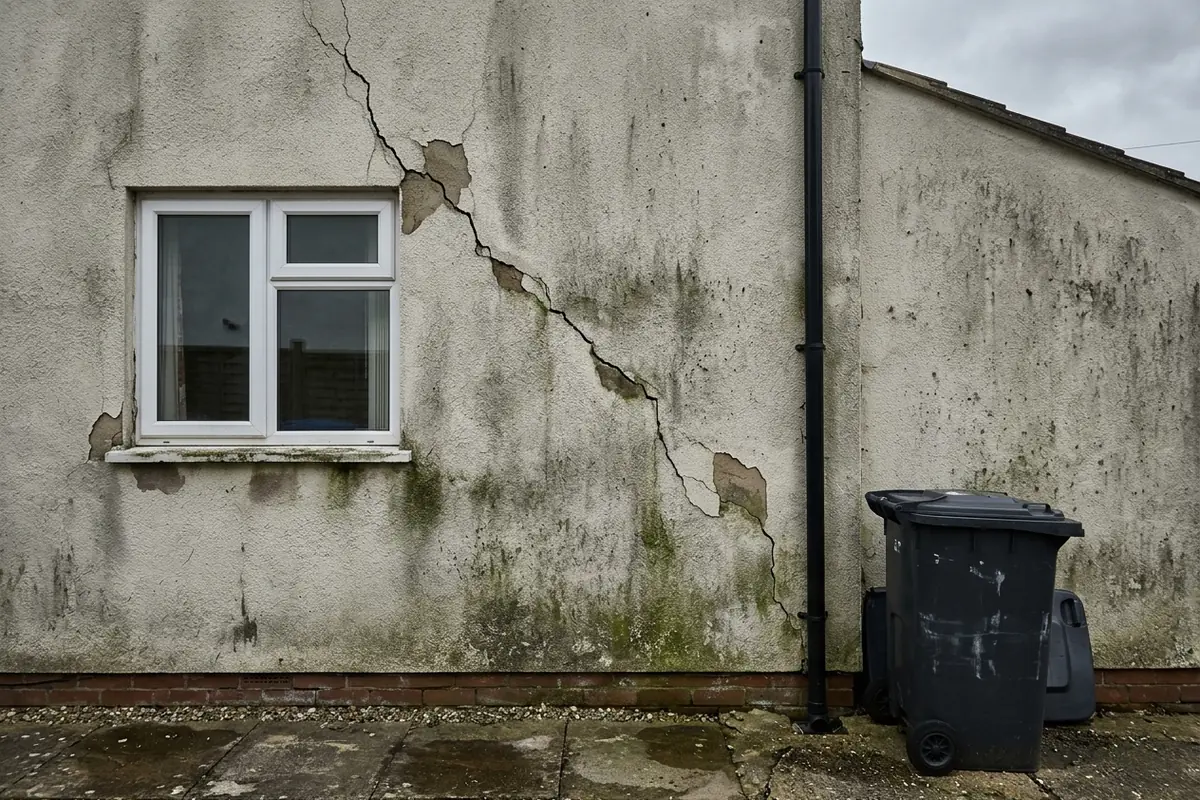
First a fine crack appears, often from the corner of a window. Rain blown in off the sea gets behind it. In a cold snap the water freezes and lifts the render a little. Next year the crack is wider, there is a green streak below it, and a patch sounds hollow when you knock.
From the pavement it only looks shabby. On the other side of the wall the damage is worse. The bedroom has a damp corner that no amount of heating will dry.
How to get your price
Describe the walls
Put in who you are, a number to ring and your part of town. Then say which rooms need work and what you can see there: cracks, a pattern on the ceiling, a hollow patch.
A Lowestoft plasterer phones you
A plasterer who works in your part of town rings when you said would suit. They will want sizes, and to know what is on the walls now. For most jobs they then come and look.
You get a figure and decide
The plasterer tells you what the work will cost. Get that in writing and take as long as you need. If it is not for you, you say no and pay nothing.
Patch it or strip it?
Not every cracked wall needs a new coat from top to bottom.
If the render is firm apart from a few cracks and one or two hollow areas, those can be cut out and patched. The hard part is the match. A patch in a painted wall disappears under the next coat of masonry paint. A patch in a coloured render will show unless the whole face is coated again.
If large areas are hollow, or the wall has been patched many times already, it is usually better to take the lot off and begin again. A UK rendering guide puts a 10 square metre patch repair in cement render at £150 to £200, and in monocouche at £450 to £550. That gives you a feel for when patching stops making sense.
The main kinds of render
- Sand and cement. The traditional choice. Two or three coats, then painted. Lowest cost, but hard and prone to fine cracks as it ages.
- Lime. Softer, and able to let damp out of the wall. The right choice for old solid-walled houses.
- Monocouche. A one-coat, through-coloured render from a bag. It is scraped to an even texture and needs no paint.
- Silicone and acrylic. Thin, flexible top coats over a mesh-reinforced base. They shed water and resist cracking, and come in many colours.
- Pebbledash. Stones thrown on to a wet coat. Tough, and out of fashion. It can be taken off, or rendered over if it is sound.
By the sea, ask about salt in the air and green algae. Some finishes are made to shed water and stay cleaner, and a plasterer who renders locally will know which have lasted near the seafront.
Typical cost to render a house
Choose the kind of house and the UK guide's range for a basic lime or cement render appears.
The range shown is a UK-wide guide price from a published UK cost guide, there to guide you and never a quote. The bill for your own home comes down to how big the room is, what state the old plaster is in, how awkward the work is to get at and anything the plasterer uncovers along the way.
All eight guide prices in one table
| Job | UK guide price |
|---|---|
| Rendering the outside of a house: 2-bedroom bungalowRendering a two-bedroom bungalow in a basic lime or cement render. The guide allows four to six days. | £2,500 to £3,500 |
| Rendering the outside of a house: 3-bedroom semiRendering a three-bedroom semi-detached house in a basic lime or cement render. The guide allows six to nine days. | £4,200 to £5,500 |
| Rendering the outside of a house: 4-bedroom detachedRendering a four-bedroom detached house in a basic lime or cement render. The guide allows seven to fourteen days. | £6,700 to £8,300 |
The range shown is a UK-wide guide price from a published UK cost guide, there to guide you and never a quote. The bill for your own home comes down to how big the room is, what state the old plaster is in, how awkward the work is to get at and anything the plasterer uncovers along the way.
What changes the price
The guide gives its UK average as about £38 a square metre for a mid-range render. Three things move it most.
- The finish. By the guide's figures, monocouche on a 200 square metre semi comes to £9,000 to £12,000, against £3,000 to £4,000 for plain cement render.
- Access. Anything above the ground floor needs scaffolding, and that is usually priced on top.
- What is there now. Old render or pebbledash that has to come off first adds days. A UK lime render guide puts removing old render from a terraced house at £1,500 to £3,000.
Rendering on Lowestoft houses
Solid-walled Victorian houses, like many in Kirkley, need a render that lets the wall dry out. A hard cement coat on soft old brick can trap water and do more harm than the weather. Ask about lime.
Listed buildings and houses inside a conservation area can need consent before the outside finish is changed. Check with East Suffolk Council before you choose a colour.
If money is tight and only one wall can be done this year, start with the one that takes the weather off the sea.
Damp patches indoors on a rendered wall are covered in damp, salt and plaster. Inside walls spoiled by damp may need replastering once the outside is sound.
Plastering services in Lowestoft
- Wall skimmingA thin, flat coat of new plaster over tired walls.
- ReplasteringOld plaster off, new plaster on, room by room.
- Ceiling plasteringCracked, sagging and stained ceilings skimmed or renewed.
- Artex ceilingsSwirls and stipple covered, skimmed flat or removed.
- Plaster repairsBlown patches, cracks, holes and leak damage made good.
- Plasterboarding and dry liningNew walls and ceilings boarded, taped and skimmed.
Parts of Lowestoft and nearby
Plastering help for the whole town, north and south of the water, and for these places around it.
- Town centre and north Lowestoft
- Kirkley
- Pakefield
- Oulton Broad
- Oulton
- Carlton Colville
- Gunton
- Corton
- Kessingland
- Gisleham
- Blundeston and Somerleyton
- Lound and Hopton-on-Sea
- Beccles
Worth knowing before you ask
- It is free. Sending the form costs nothing, and neither does the call that follows. You can turn the price down.
- It is short. Four things: who you are, a phone number, whereabouts you live and what needs plastering. We do not ask for an email or a door number.
- The prices come from published guides. Any figure on this site comes from a published UK cost guide. They are there to give you a rough idea. Only a plasterer who has seen your walls can give you a quote.
- Nothing else happens to your details. A plasterer needs them to ring you about your walls. That is their only use, and no one buys or sells them.
Common questions
Does rendering need planning permission?
Repairing or renewing render in a similar finish does not usually need it on an ordinary house. Rules are tighter for listed buildings, conservation areas and flats, and where you change the look of the house. Ring planning at East Suffolk Council and they will say for your address.
What time of year is best for rendering?
Render needs dry, mild weather. Frost can ruin a coat that has not set, and heavy rain can wash it off the wall. Most outside work is done from spring to autumn, so plasterers who render fill those months early. Asking in winter puts you ahead of the rush.
How long does rendering a house take?
A UK cost guide allows four to six days for a two-bedroom bungalow, six to nine for a three-bedroom semi and seven to fourteen for a four-bedroom detached house. Bad weather can stretch that.
Cracks let in more water every winter
Render fails from the cracks outwards. Water gets behind, frost lifts it, and each winter the hollow area is larger. All the while the wall beneath is getting wet, and so is the plaster on the inside. A patch now can save a full strip later.
Name the kind of house, the walls and your part of Lowestoft. The quote is free.